Chapter 4
Publishing and interacting
Publishing on Blurt is familiar — write, add media and choose where the post belongs — but the result is signed by your account and recorded on a public blockchain. A few careful habits will help you create confidently and interact responsibly.
Before you publish
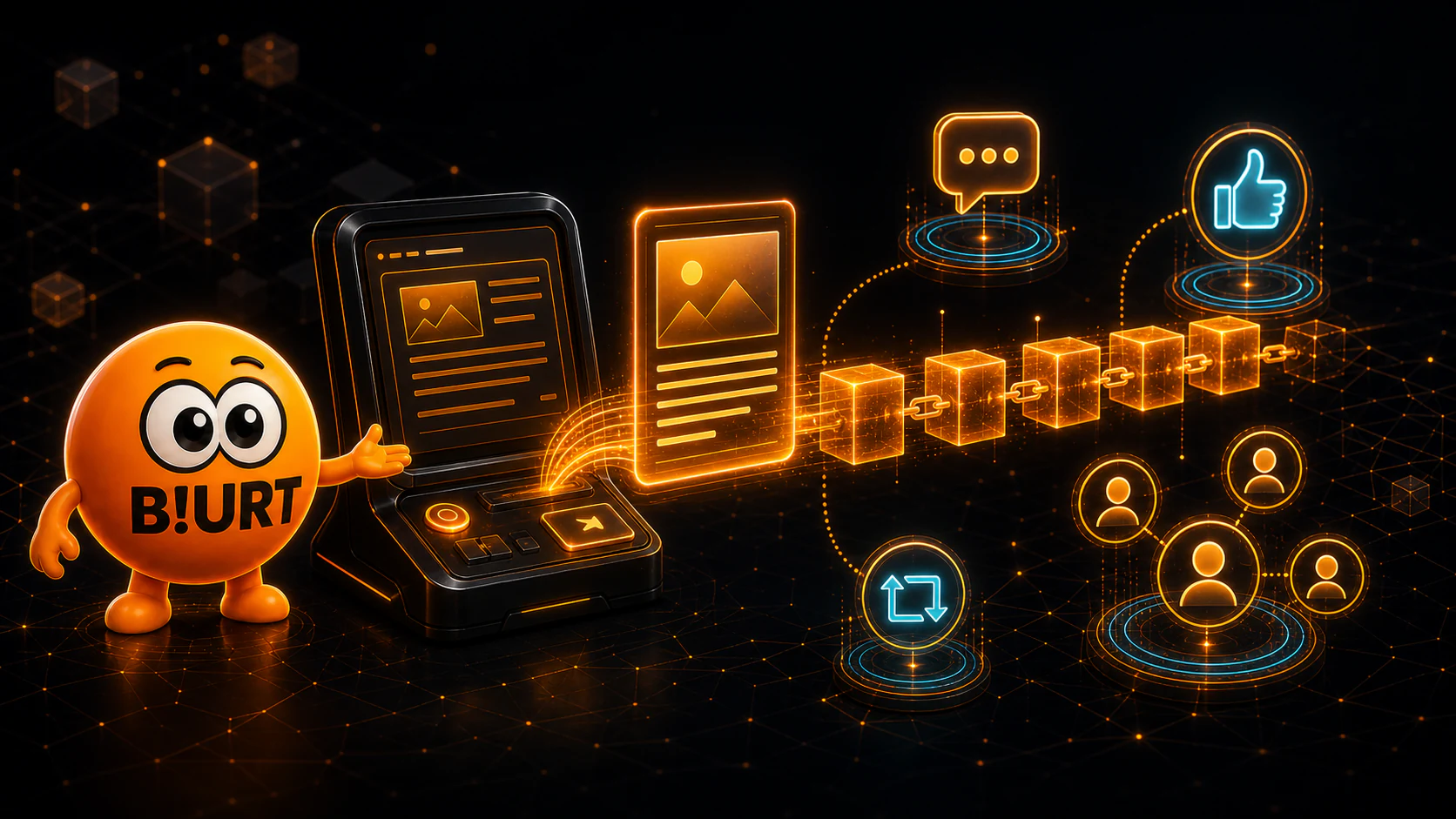
A compatible frontend prepares the operation and asks your account to sign it; the Blurt blockchain validates and records it. You can change frontends without creating a new identity, but you should evaluate each interface before authorizing it.
Verify the address
Open a frontend from a trusted bookmark or known source and inspect the complete domain before signing in.
Use Posting authority
Publishing, commenting and content voting normally need only your Posting key or a compatible signer acting with Posting authority.
Expect a public result
Review the title, body, media, links, tags and destination as information that other services may read and retain.
Shape your first post
A useful post gives readers a clear reason to open it and enough context to understand or discuss it. Frontends may offer different editors and previews, but the same basic elements matter.
A specific title and suitable media
Write a title that accurately describes the subject. Add an image only when you have the right to use it, and provide useful alternative text when the editor supports it.
A readable body
Structure longer text with short paragraphs and headings. Preview links, images and Markdown formatting before signing the publication.
Relevant discovery choices
Choose a suitable community or category and only tags that describe the content. Their exact presentation and discovery effects depend on the frontend.
Sources and authorship
Publish work you created or are permitted to share. Clearly credit quotations, facts, images and other material from external sources.
Posts and interactions are public
A post and a comment use the same core protocol operation with different parent fields. Content votes are separate signed operations. Once accepted in a block, these actions become part of Blurt’s shared public history.
A frontend may also place formatting and discovery information in public metadata. Interfaces and indexers can transform what they display, so the view on one website is not the only possible copy of your activity.
Your account name, publication relationship and blockchain timing are public. The text, links and public metadata of posts and comments can be read by compatible services. Votes and replies are associated with the accounts that signed them; follows and reblogs can also be exposed through compatible social services.
Join the conversation
Blurt is more useful when publishing leads to genuine exchanges. Read the complete post before responding, stay relevant to the subject and treat every comment as another public publication signed by your account.
Add something meaningful
Ask a precise question, contribute an experience or explain what you found useful instead of leaving the same generic message everywhere.
Continue your own threads
Respond to thoughtful comments on your work and clarify misunderstandings. Consistent conversation helps readers discover the person behind the account.
Frontend features can differ
Following, reblogging, mentions, community roles and feeds are composed by compatible applications and plugins; their exact behavior is not identical in every interface.
Vote with intention
A content vote is a signed Posting-authority operation. It can signal that you value a post or comment and can contribute stake-based influence to the content’s reward calculation while it is eligible.
Voting uses voting mana, which regenerates over time. The effect of a vote depends on current mana, selected strength, Blurt Power, timing and protocol reward parameters — it is not a fixed BLURT amount.
- Positive votes only
- Blurt accepts positive content votes, not downvotes that reduce another publication’s rewards. A zero-weight operation can remove an existing vote where protocol rules permit.
- Stake and mana
- More Blurt Power can provide more potential voting influence, while repeated votes draw down the account’s current voting mana until it regenerates.
- Vote strength
- If a frontend offers a strength selector, a lower percentage uses less of your available voting capacity. It does not transfer your Blurt Power to the author.
Understand content rewards
Posts and comments can earn rewards from the positive votes they receive during the seven days after publication. The more voting influence they receive, the more strongly they participate in the distribution of new BLURT created for content rewards. Voters do not send funds from their own wallets: Blurt distributes these rewards automatically at the end of the seven-day period.
- Author
- The author receives 50% of the eligible reward, minus any beneficiary shares configured for the post. Most of the author reward is paid as Blurt Power, helping the account grow.
- Curators
- The other 50% is shared among curators according to the influence and timing of their votes. Curation rewards are paid as Blurt Power.
- Beneficiaries
- A post can allocate percentages of the author’s 50% share to named beneficiary accounts before voting begins.
Publishing gives your content the opportunity to earn author rewards. Voting supports creators and earns curation rewards.
A healthy start on Blurt
Complete only the public profile details you genuinely want to share. Read several posts, communities and tag feeds before choosing where your content belongs. Publish an original first post with a clear title, relevant tags and properly credited sources. Return to the conversation and answer meaningful comments on your publication. Vote for content you have actually reviewed, using a strength that fits your available voting mana.