Chapter 1
Understanding Blurt
Blurt combines a public blockchain with familiar social actions such as publishing, commenting and voting. Understanding which part is the network and which part is an app will make everything else much easier.
The blockchain and the dApps are different
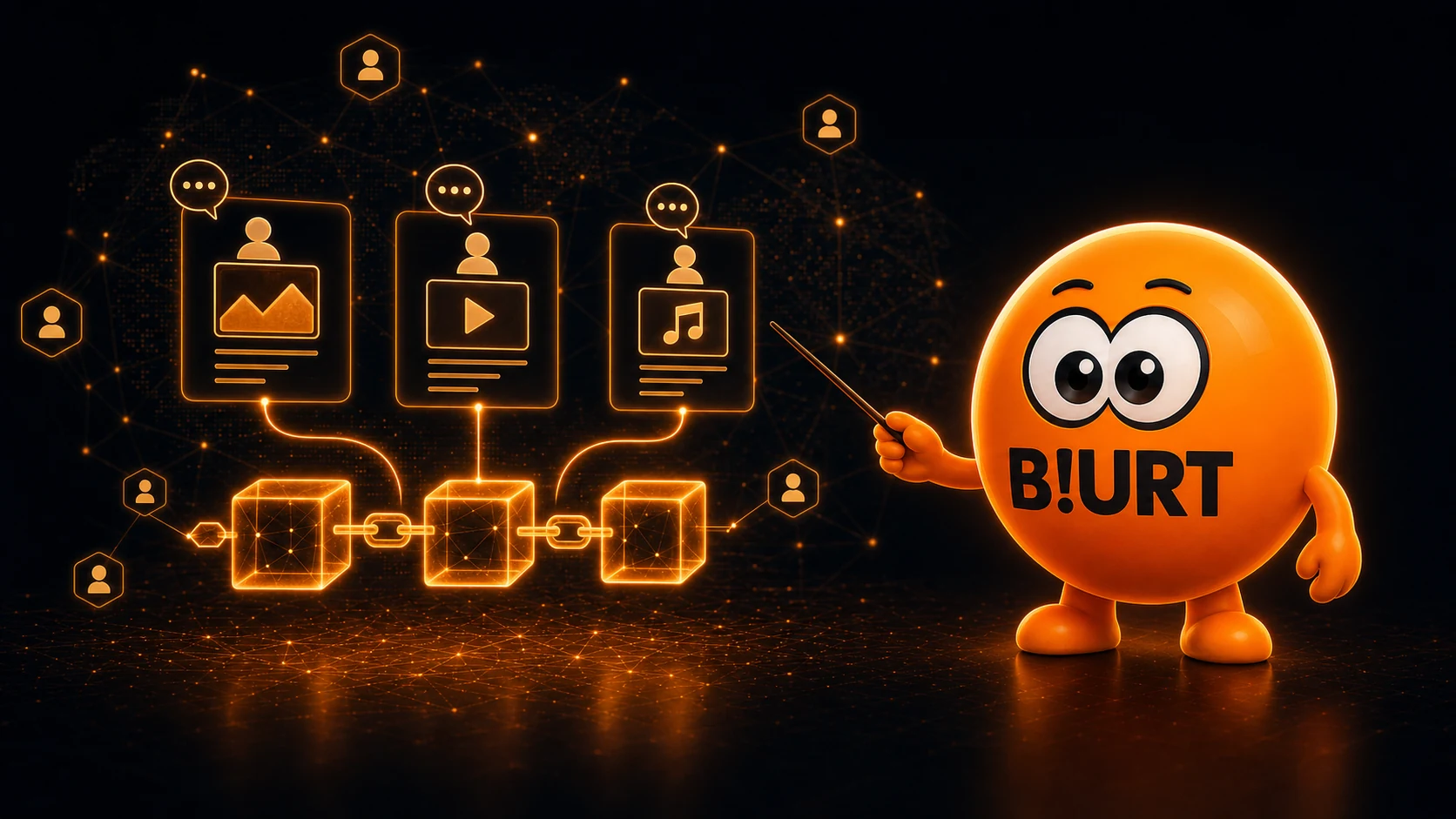
A frontend can make Blurt feel like a familiar social platform, but the interface and the blockchain have different responsibilities.
The Blurt blockchain
The network validates operations, produces blocks and stores the shared account and social state according to protocol rules.
Blurt dApps
Websites and apps provide editors, feeds, profiles, discovery and wallet interfaces. Their features and presentation can differ.
What can you do on Blurt?
A Blurt account is both a social identity and an account controlled through cryptographic authorities. Depending on the interface you choose, you can:
Publish long-form posts, short updates and comments. Vote, follow creators and participate in conversations and communities. Power up BLURT to increase your stake-based influence and take part in witness governance. Earn author rewards on eligible content and curation rewards for eligible votes. Reward amounts depend on protocol rules and on-chain activity.
Who keeps the network running?
Blurt uses delegated proof of stake. Scheduled witnesses operate blockchain nodes, verify incoming transactions, produce blocks and participate in network governance.
Blurt stakeholders can vote for witnesses. This connects block production and governance to public, on-chain choices rather than to the operator of a single frontend.
A few Blurt characteristics to remember
No downvotes
Blurt's protocol does not use negative votes to reduce a publication's rewards.
Network operation fees
Blockchain operations can carry fees determined through witness consensus. Amounts are network-controlled and can change.
Keys, not one platform password
Different account authorities protect social and financial actions. The next chapter explains the four key roles.
Public by design
Treat content and actions published on-chain as public information that may be retained or indexed by multiple services.
A public social blockchain
Blurt is a public social blockchain. Its protocol records social actions such as posts, comments and votes, alongside account and token operations, in a shared ledger maintained by the network.
This means your Blurt identity is not merely a profile inside one website. Different applications can read the same blockchain and let you use the same account through different experiences.